What Can My Kid Actually Build? A By-Age Guide
A realistic, by-age guide to what kids can build at home, from cardboard at 4 to a shipped project at 14, matched to what each stage can actually handle.
The short answer
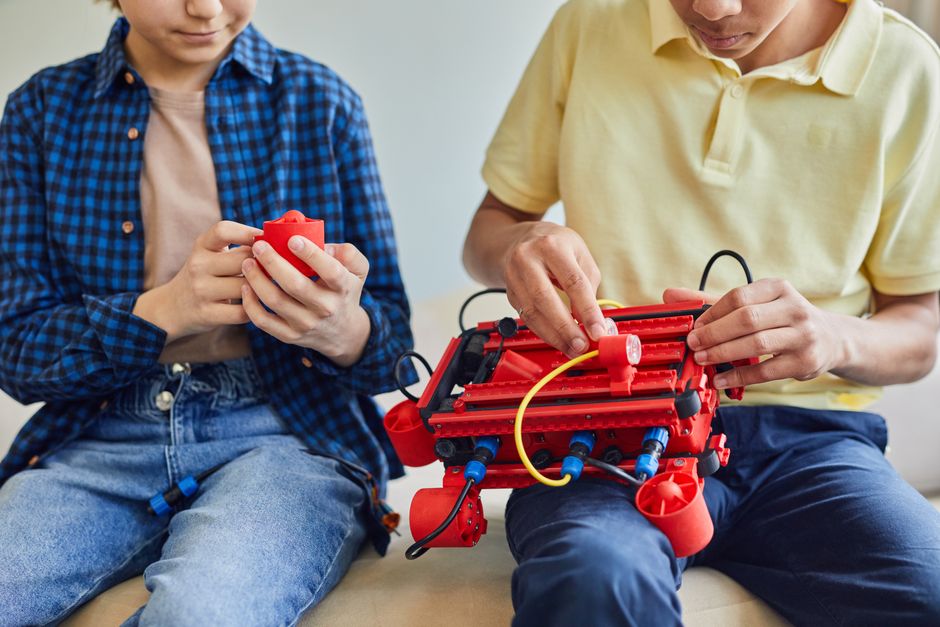
Match the build to the stage, not the age on the box. Ages 3 to 5 build with cardboard, water and blocks. From 6 to 9, marble runs, simple circuits and basic games. From 10 to 12, a real robot, model or small stall. Teenagers can ship something that works for other people. The same loop runs throughout: try, fail, fix.
"What can my kid actually build?" is one of the most practical questions a parent can ask, and one of the hardest to get a straight answer to. Most guides either dump a list of 50 random activities or pitch you a kit "for ages 8 to 12" that turns out to be wrong for your particular eight-year-old.
Here is a more useful way to think about it. The right build is not set by the age printed on a box; it is set by what your kid can genuinely own at their stage, take charge of, get stuck on, and fix. Below is a realistic map from the cardboard years to the first real shipped project, with the thinking behind each stage so you can adapt it to the kid in front of you.
Two things hold across every age. First, the loop is always the same: try, fail, work out why, change one thing, try again. Second, the goal is for the kid to own the build. The moment you take it over, it stops being theirs and stops teaching them.
The by-age map
| Age | What they can build | What it grows | Your role |
|---|---|---|---|
| 3–5 | Cardboard creations, block towers, water and sand play, dough, simple cooking | Cause and effect, "I made this," basic problem-solving | Get out of the way; ask "what happens if…?" |
| 6–9 | Marble runs, simple circuits, bug hotels, comics, a basic Scratch game, a den | Planning, sequencing, first real debugging | Set the goal, then ask questions instead of fixing |
| 10–12 | A micro:bit or robot project, a working model, a short film, a small stall | Iteration, systems thinking, finishing things | Coach the loop; let real problems happen |
| 13+ | A project that ships: a game, product, service, event, or channel | Ownership, dealing with real users and setbacks | Step back; be a sounding board, not a manager |
The rest of this guide unpacks each stage.
Ages 3 to 5: the cardboard years
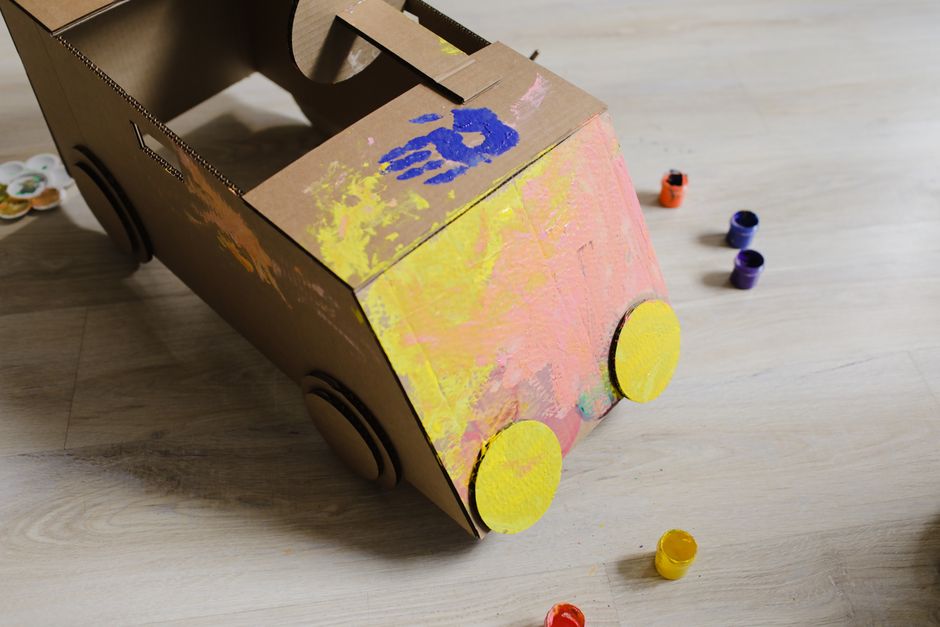
At this age, do not overthink it and do not over-buy. The most valuable materials are the cheapest and most open-ended: cardboard boxes, blocks, water, sand, dough, tape. A box becomes a rocket, then a shop, then a cave, all in one afternoon, and that transformation is the learning.
The win here is not a finished object. It is the discovery that "I can make a thing, and I can change it when it is not right." A tower that falls down teaches more than a tower that was built for them. Resist the urge to fix the wobble; instead ask, "what could make it stronger?" and hand back the blocks.
Skip the complex branded kits at this age. They tend to have one right answer and a lot of small frustrating parts, which is the opposite of open-ended play. Cardboard never runs out of possibilities.
Ages 6 to 9: first real projects
Now a project can have a goal and a clear way to fail, which is exactly what you want. The sweet spot is something with an obvious success condition that breaks in visible, fixable ways:
- A marble run where the marble keeps flying off a corner (fix the angle, add a wall).
- A simple circuit that lights a bulb or spins a motor (wrong way round, loose connection).
- A bug hotel or bird feeder that has to survive outside.
- A basic Scratch game where the sprite does the wrong thing until the logic is fixed.
- A den or fort that has to actually stand up and hold a kid.
Those visible failures are not setbacks, they are the curriculum. Each one gives your kid something concrete to diagnose. This is the age to practise being a guide on the side: when the marble flies off, bite your tongue and ask, "what do you think is making it jump there?"
Ages 10 to 12: the build gets real
By now a kid can handle a project with real moving parts and a longer arc, and crucially, one with stakes. This is where building starts to feel like the real thing rather than an activity:
- A programmable robot or micro:bit project that senses and reacts.
- A working model: a bridge that holds weight, a hydraulic arm, a model rocket.
- A short film with a script, shots and editing.
- A small stall at a market or school fair, with a thing to sell and money to count.
- A game other people actually play, in Scratch, Roblox Studio or beyond.
The leap at this stage is finishing and iterating, taking version one, seeing it fall short, and making version two better rather than abandoning it. That is also where most kids want to quit, so your job is to coach them through the dip. If they are pulled toward code specifically, our age-by-age coding starter map shows exactly which free tool fits this stage and what comes next.
Ages 13 and up: build something that ships
A teenager can build something real enough that other people use it, and that changes everything. When a build has a genuine audience, a deadline or a paying customer, the motivation and the learning both jump, because the feedback is no longer "is this good?" but "did it work for someone?"
- A game or app that strangers play or use.
- A product they make and sell (prints, crafts, 3D-printed parts, baked goods).
- A service: tutoring, repairs, dog-walking, a tiny business with real customers.
- An event they organise, or a channel they actually run.
Here your role is at its lightest. You are a sounding board, an occasional driver, and the person who helps with the parts that genuinely need an adult. You are not the project manager. Letting a teenager carry the weight of a real build, including the risk of it flopping, is most of the value.
What's the one rule under all of it?
Whatever the age, the test for a good build is the same: can my kid own this, get stuck on it, and fix it themselves? If yes, it is the right project, whether it is a cardboard rocket or a small business. If you find yourself doing the thinking, scale it down until the thinking is theirs again.
And do not wait for the perfect kit or the ideal project. The cardboard-and-tape version this weekend beats the flawless version that never happens. Start where your kid is, hand them the loop, and let interest do the rest.
Key takeaways
- Match builds to the stage, not the age on the box, and scale anything to what your kid can genuinely own and fix themselves.
- 3 to 5: cardboard, blocks, water and dough. Open-ended beats branded kits; the win is "I made this and can change it."
- 6 to 9: projects with a clear goal that fail visibly, marble runs, circuits, simple games. The visible failures are the curriculum.
- 10 to 12: real, longer builds with stakes, robots, models, films, a stall. The skill is finishing and iterating, not quitting.
- 13+: build something that ships to real users. Lightest parental role; the value is in them carrying a real project, flop risk included.
This is part of Learn by Doing: A Parent's Guide to Raising a Kid Who Builds. To turn screens into a build tool, see Turn Screen Time Into Build Time; to kit out for it cheaply, see A Home Maker-Space on Any Budget.
Common questions
- What can a 4-year-old build?
- More than you think, as long as the materials are open-ended and safe. Cardboard boxes become rockets and shops; blocks become towers that must not fall; water, sand and dough teach cause and effect by the handful. At this age the win is not a finished object, it is the idea that 'I made this and I can change it.' Do not buy complex kits yet; they overwhelm and end up shelved.
- What is a good first real project for a 7-year-old?
- A marble run, a simple circuit that lights a bulb, a bug hotel, a comic, or a basic Scratch game. The sweet spot is a project with a clear goal ('make the marble reach the bottom without flying off') that fails in obvious, fixable ways. Those visible failures are the point: they give your kid something concrete to diagnose and improve.
- My kid is 12. What can they build that feels real?
- Plenty. A programmable robot or micro:bit project, a working model, a short film, a small stall at a market, or a Roblox or Scratch game that other people actually play. By this age the build can have real stakes, a customer, an audience, a deadline, which raises the motivation and the learning. Your role shifts to coaching the process and letting them own the result.
- Is my kid behind if they haven't built much yet?
- No. There is no developmental cliff and no head start that cannot be closed. A motivated kid who starts building at 12 catches up fast, because the thing that matters is interest and reps, not an early start. The only real mistake is waiting for the perfect kit or project; the cardboard-and-tape version today beats the ideal version that never happens.
The weekly build prompt
One short email a week: a small, concrete thing your kid can build or try this weekend, plus the occasional story of a real family who built something. No spam, no lectures.
Keep reading
Learn by Doing: A Parent's Guide to Raising a Kid Who Builds
A practical, parent-facing guide to learning by doing at home: the method, the science that holds up, and how to raise a kid who builds, by age and budget.
Read
Turn Screen Time Into Build Time (Without Starting a Screen War)
How to shift your kid from consuming screens to creating with them, without a fight. Swaps, the science of displacement, and what to try this week.
Read
A Home Maker-Space on Any Budget: What to Get, What's a Waste
How to set up a home maker-space for kids on a $0, $50 or $150 budget, what to buy, what genuinely waits, and the expensive mistakes worth avoiding.
Read
How to Get My Kid Into Coding: An Age-by-Age Starter Map
A free, age-by-age path into coding for kids: which tool to start with at each stage, what comes after Scratch, and when to move to real code.
Read