When Your Kid Quits the Second It Gets Hard
A kid who gives up the moment something is difficult isn't lazy. Here's the 3-move script to get them from stuck back to the next attempt.
The short answer
A kid who quits the instant it gets hard is not lazy. They have learned that hard means I am about to fail, so stopping is self-protection. The fix is a short script: name the hard part, shrink the task to one next step, and make the goal the next attempt. Not pushing harder, but making restarting feel safe.
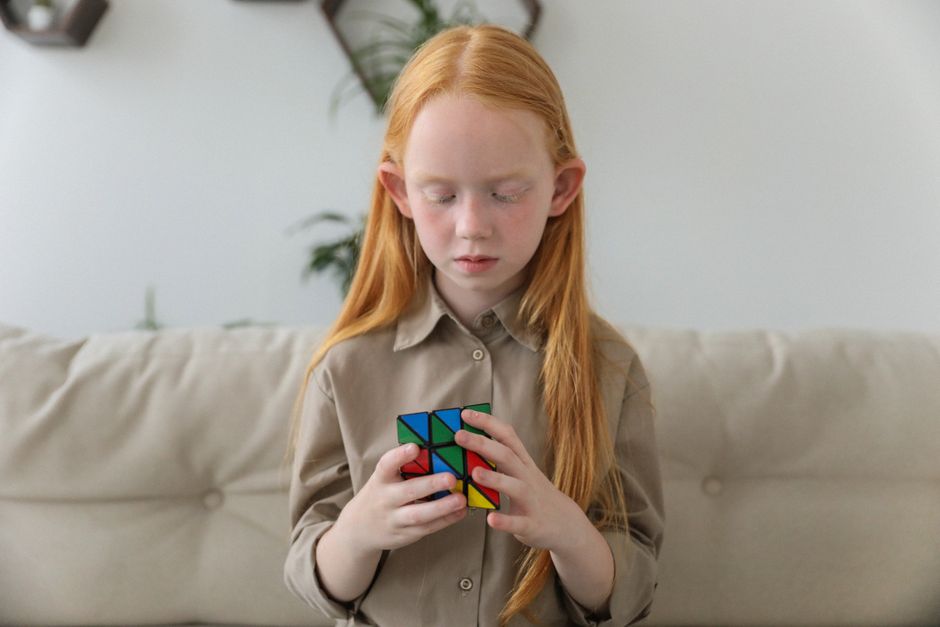
You have seen it. The puzzle, the homework, the build, the instrument, and within thirty seconds of it getting hard, your kid is done. Pushes it away, declares it stupid, says they are bad at it, walks off. The temptation is to read this as laziness or a lack of grit, and to respond by pushing harder.
That reading is wrong, and the pushing usually backfires. A kid who quits the instant something is difficult has almost always learned something specific: that hard is the feeling right before they fail and feel stupid. Quitting is not weakness. It is them protecting themselves from that feeling. Once you see it that way, the fix becomes obvious, and it is not about pushing.
Why do kids actually quit?
Difficulty triggers a small prediction in a kid's head: this is going to end badly. If past hard moments have reliably led to frustration, a parent taking over, or a sense of being not good enough, then walking away early is the smart move. They are avoiding a known bad outcome.
This is worth sitting with, because it flips the whole problem. The kid does not need more pressure to endure the bad feeling. They need the bad feeling to stop being the predicted outcome. You do that by making the next step small enough that it ends in a little success instead of a failure, often enough that hard stops being a danger signal.
There is research underneath this. After a setback, children praised for being clever quit faster than those praised for effort (Mueller and Dweck, 1998), because for them, struggling means their cleverness is in question. And the large Nature study (Yeager and colleagues, 2019) found that helping kids reframe difficulty works, but mainly in environments that back up the message. The throughline: how a kid reads difficulty is learned, and it can be re-learned.
The 3-move script
When your kid hits the wall and starts to bail, you have a short window. Here is a script that works because it makes starting again small and safe, rather than demanding more endurance.
- Name the hard part out loud. "This bit is genuinely tricky, isn't it." You are not minimising and not cheerleading. You are telling them that hard is normal and expected, not a sign something is wrong with them. Naming it takes most of the sting out.
- Shrink the task to one next step. Not "finish it", not "keep going". One small, concrete, almost-certainly-achievable next action. "Let's just get this one piece to fit." The wall is usually the whole remaining mountain. Make the next step a single stair.
- Make the goal the next attempt, not the finished thing. "Let's just try one more version and see what happens." This is the key move. When the goal is a finished, perfect result, every attempt is pass or fail. When the goal is simply the next attempt, there is no way to fail at it, and the pressure drains away.
Three moves: name it, shrink it, aim for the next try. Run it calmly, every time, and you are teaching your kid that hard is survivable and that there is always a small next step.
What not to do
The instincts that feel helpful in the moment usually make the reflex worse.
- Don't take over and fix it. It ends the bad feeling instantly, which is exactly the problem: it confirms that hard things get rescued, so quitting works.
- Don't push with "just try harder". It tells the kid the hard feeling is their fault for not trying enough. They are already trying not to feel stupid. More pressure raises the stakes they are fleeing.
- Don't praise the cleverness. "You're so smart, this is easy for you" makes the next hard thing a threat to that label, which is precisely what drives clever-praised kids to quit.
- Don't make it a battle of wills. If sticking with it becomes about obeying you, the task disappears and the conflict takes over. Stay on the same side as your kid, against the problem.
Pick one hard thing on purpose
Alongside the in-the-moment script, there is a slower move worth borrowing, sometimes called the Hard Thing Rule (from the psychologist Angela Duckworth): the family picks one genuinely hard thing each person is sticking with for a defined stretch, an instrument, a sport, a long build, and you do not quit it on a bad day, only at a natural stopping point.
Done in the builder's spirit, the hard thing has something real at the end of it, and the rule is not "suffer through", it is "we do not bail mid-attempt". It gives a kid repeated, low-drama practice at staying with difficulty long enough to get to the other side, which is the exact muscle that quitting-on-contact never lets them build.
By age
| Age | What quitting looks like | Your lead |
|---|---|---|
| 5–7 | Pushes the puzzle away, "I can't" | Name it, shrink to one piece, sit with them |
| 8–10 | "This is stupid", abandons the game/build | Name it, one next step, aim for the next try not the finish |
| 11–13 | Avoids starting hard things at all | Lower the bar to start; make the first version allowed to be rough |
| 14–16 | Drops things the moment they are not immediately good at them | Talk about the messy middle openly; pick one hard thing to stay with |
The script is the same throughout. As kids get older the work shifts from doing it beside them to naming the pattern out loud and letting them run the moves themselves.
Key takeaways
- A kid who quits when it gets hard is protecting themselves from an expected bad feeling, not being lazy.
- The fix is not more pressure. It is making the next step small and safe enough to succeed.
- Use the 3-move script: name the hard part, shrink the task to one step, make the goal the next attempt.
- Avoid taking over, "try harder", cleverness praise, and battles of will.
- For the slow version, pick one hard thing to stay with, builder-style, and do not quit it mid-attempt.
This is the in-the-moment companion to Why Letting Your Kid Fail Is the Best Thing You Can Do. For why the popular advice here is often oversold, see Is Growth Mindset Actually Real, or Overhyped?.
Common questions
- Is it bad to let my kid quit sometimes?
- Quitting a specific activity that genuinely is not for them is fine and sometimes wise. The pattern worth addressing is quitting the instant anything gets difficult, regardless of the activity, because that closes the door on everything hard, which is everything worth doing. The goal is not to force them to finish, it is to break the reflex that hard equals stop.
- Should I offer a reward for sticking with it?
- Be careful. Rewards can work short-term but tend to shift the focus from the task to the prize, and the sticking-with-it stops when the reward does. A stronger long-term move is to make the next step small enough that they succeed, and then notice the strategy they used. Earned success is the most durable motivator.
- What if they get genuinely upset, not just frustrated?
- Comfort first. You cannot coach a kid through real distress, and trying to teaches them that you care more about the task than about them. Settle the feeling, take a break if needed, and only return to the next step when they are ready. Steady the kid, then rebuild the thing.
- My kid is a perfectionist and won't start unless it'll be perfect. Same thing?
- Related, and the fix overlaps. A perfectionist quits before starting because the imagined failure is unbearable. The same shrink-it move helps: make the first step deliberately rough and low-stakes, an ugly first version that is allowed to be bad. Lowering the bar to start is often the whole unlock.
Sources
The weekly build prompt
One short email a week: a small, concrete thing your kid can build or try this weekend, plus the occasional story of a real family who built something. No spam, no lectures.
Keep reading
Why Letting Your Kid Fail Is the Best Thing You Can Do
An honest look at the growth-mindset research, then the part that works: the iterate-don't-quit loop to run with your kid when something breaks tonight.
Read
Is Growth Mindset Actually Real, or Overhyped?
An honest read of the growth-mindset research: what the big meta-analyses found, what survived, and what to do with your kid instead of the slogan.
Read